Why would I replace the factory fuel tank on a Jeep JK?
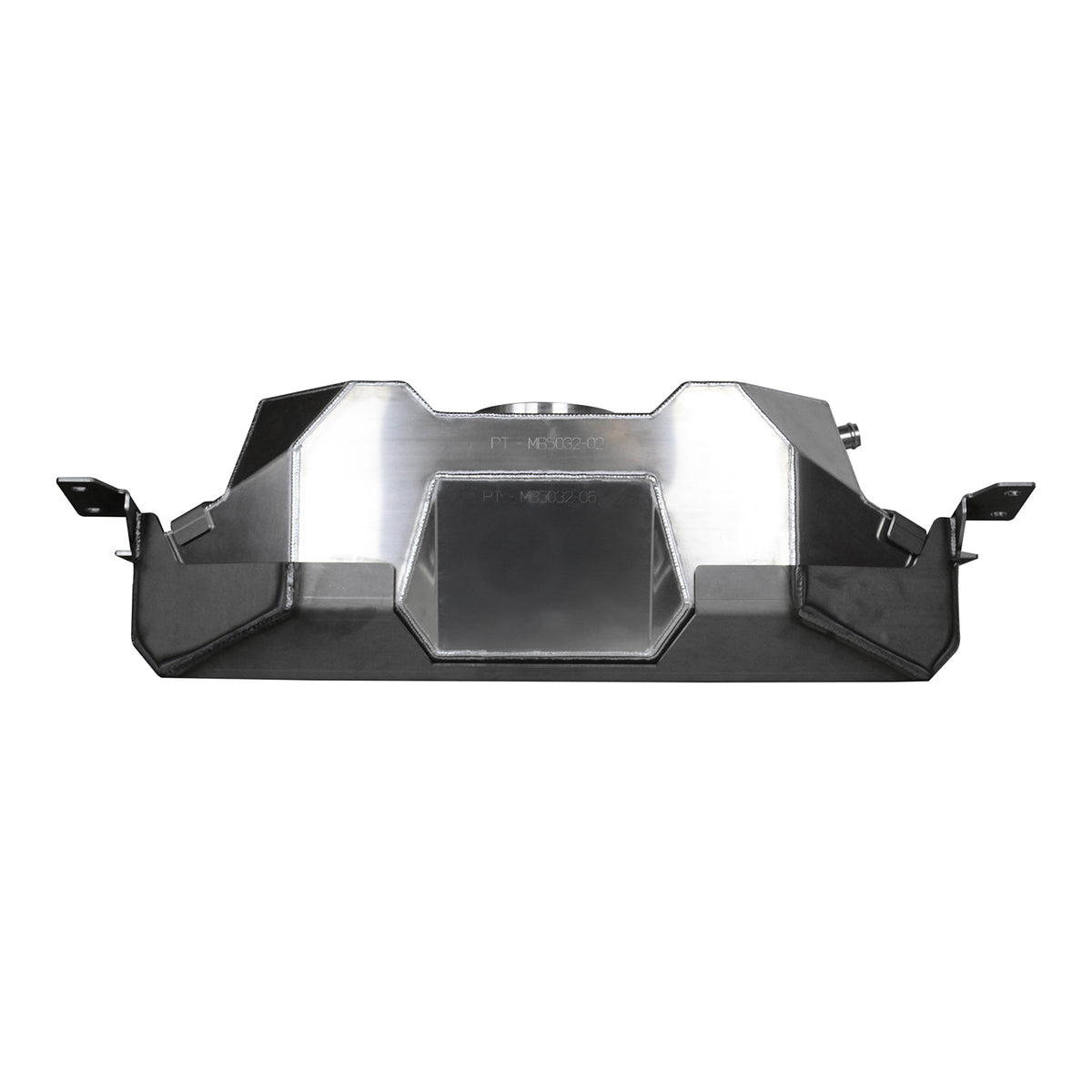
Once you start stretching the rear axle, installing a rear back half, or building a custom suspension system, the factory fuel tank often becomes a major packaging issue. The factory tank occupies valuable space needed for links, suspension travel, and rear axle clearance. The MB5099 Tomahawk Fuel Cell relocates fuel storage into a more compact package that works with serious JK chassis modifications.
How much rear stretch can the MB5099 support?
The MB5099 was designed to support rear stretch applications up to 10 inches. Its compact design creates additional space behind the axle and helps builders package suspension components without the limitations of the factory fuel tank.
How much fuel does the MB5099 hold?
The MB5099 has a 17.5-gallon capacity. This provides usable fuel volume while maintaining a compact profile that hangs only 5.50 inches below the frame rails.
Will the MB5099 work with a factory JK frame?
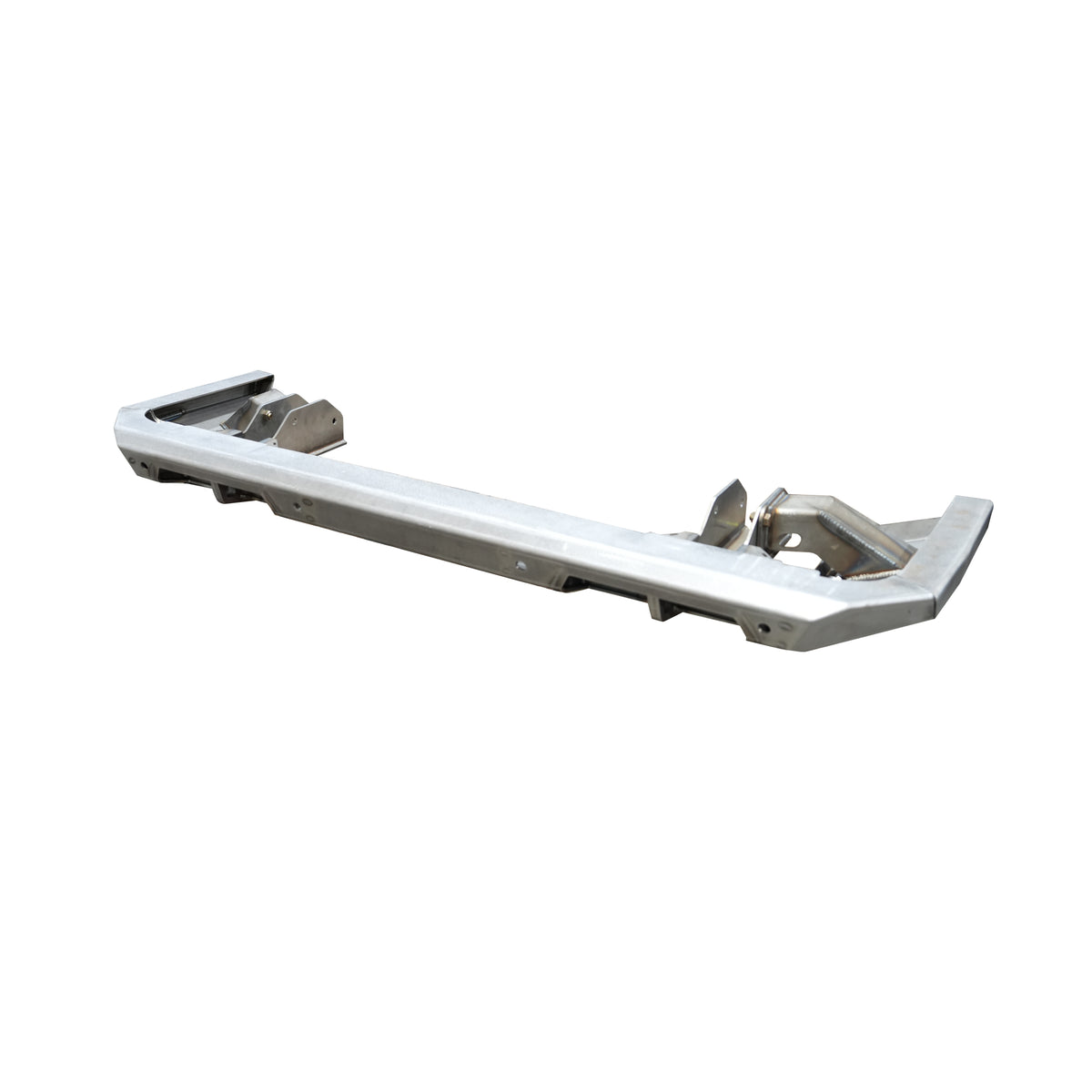
Yes. The MB5099 is designed to work with the factory Jeep JK frame and can also be used with the Motobilt MB1260 Tomahawk Rear Bumper. This makes it a practical option for builders modifying the rear suspension without completely replacing the chassis.
Do I need the MB5100 Fuel Filler Kit?
Yes. The MB5100 Fuel Filler Kit is required to access and properly connect the fuel filler system on the MB5099 fuel cell.
Will this fuel cell work with the MB1081 rear bumper?
No. The MB5099 is not compatible with the MB1081 rear bumper due to packaging and mounting constraints.
Is the MB5099 a direct replacement for the factory fuel tank?
No. This is not a simple bolt-in replacement. The MB5099 was designed for builders performing rear stretch modifications, rear suspension redesigns, back half conversions, and other advanced fabrication projects. Installation may require fuel system modifications, custom plumbing, and proper venting.
What types of builds is the MB5099 commonly used on?
The MB5099 is commonly used on Jeep JK rock crawlers, rear stretch builds, triangulated four-link suspensions, rear back half chassis systems, and custom suspension layouts where the factory fuel tank limits packaging and suspension travel.