





KingPin & Tippin: The Final Push to Trail Hero
Inside the Motodome • Build series • Episode 9
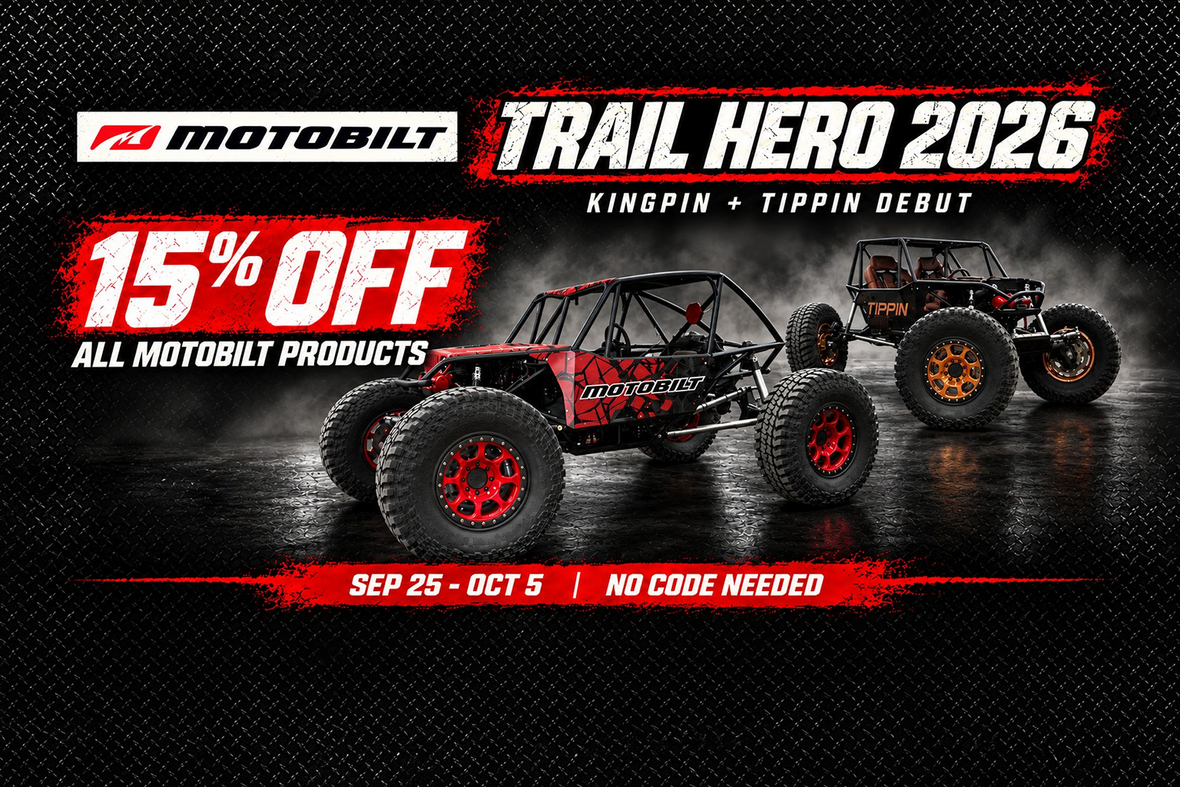
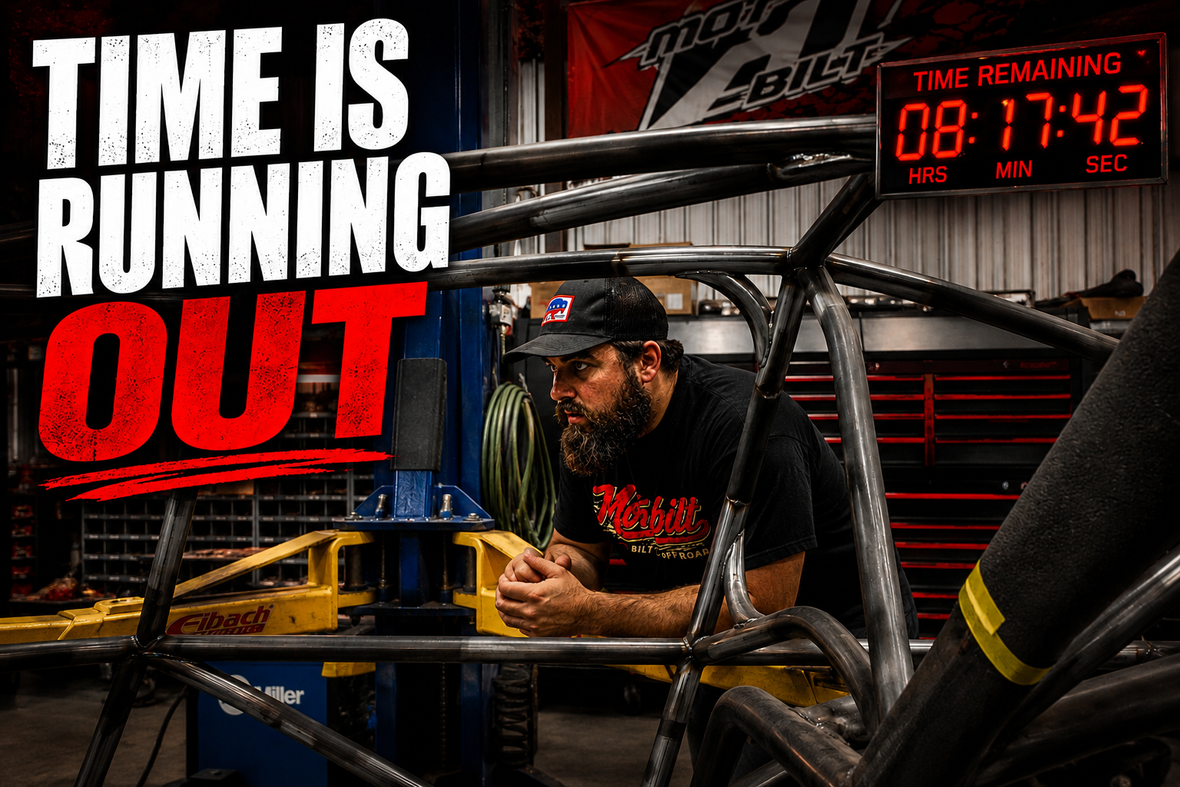
Two custom rock buggies. One trailer deadline. With Trail Hero at Sand Hollow approaching, the Motobilt crew was working through the last details on KingPin and Tippin—wiring, plumbing, clearance checks, wraps and the first rounds of testing.
The major fabrication was behind them, but that did not make either build finished. Episode 9 follows the work that turns a collection of parts into a vehicle: connecting the systems, finding the remaining problems and getting both buggies moving under their own power.
Tippin for Hunter DuBose.
Watch the build
The final push, inside the shop
Follow Bender and the crew through the last stretch of assembly, the suspension check, custom graphics and the first drives before heading west.
Prefer the full player? Watch Episode 9 on YouTube.
01 / The builds
Meet KingPin and Tippin
KingPin, built for Dan DuBose, and Tippin, built for Hunter DuBose, have distinct looks. They share the same hands-on approach to design, fabrication and assembly inside the Motodome.

KingPin
Already running and driving at the start of the episode, KingPin still needs tuning, finishing work and a close look at component clearance through suspension travel.

Tippin
Tippin is further back in final assembly. The crew is working through the remaining connections and cockpit details to get Hunter’s buggy ready for initial testing.
02 / Final assembly
Why the last details take so much work
KingPin is described as roughly 90 percent complete, but the remaining work reaches nearly every system. Steering, cooling, transmission, intercooler and brake connections all need attention as the crew pushes to get Tippin running and driving alongside it.
These jobs depend on one another. Steering needs to be functional before its movement can be checked. Wiring, sensors and electrical connections need to be installed and tested. Seats, harnesses, the dash and body panels still have to go in. A fitting or battery problem can stop the next task even when the larger components are already in place.

One of those delays comes from a compact lithium-ion battery that begins reporting faults. The buggy can start and run, but the team orders a replacement before moving further into testing. With less than a week left before the buggies need to be in the trailer, parts are being overnighted and the crew is working seven days a week.
The shop humor is still there. So is the pressure to finish with enough time left to find problems before the trip.
03 / Suspension clearance
Checking more than flex
Lifting KingPin with the shop forklift gives the crew a way to inspect what happens as the suspension articulates. The point is to see where components move relative to each other, especially in areas that look comfortable at ride height.

What the crew is watching
- Shocks and tires: how their clearance changes as the axle moves and the steering turns.
- Driveshafts and suspension links: potential contact as components move through their range.
- Steering and chassis structure: tight areas that need a closer look at articulation and compression.
Bender uses what he calls the “fat finger” rule as a quick visual reference for a tight gap. It helps point out areas worth inspecting; it is not a universal clearance specification.
A shop check is one part of the process. Bender explains that clearances can change under real-world loads, and he anticipates some contact at the shock at full lock and full compression. The forklift check helps identify those conditions before trail testing.
04 / Finishing & first drives
From bare panels to initial testing
In-house graphics and cockpit communication
While mechanical assembly continues, Joshua works through printing and laminating the graphics. The team chooses a gloss laminate for these wraps to give the panels more shine outdoors. The finished colors make the two buggies easy to tell apart: KingPin in red and black, Tippin in black with bronze accents.
Rugged Radios equipment is another part of the cockpit work. The crew discusses radios and headsets for driver-to-spotter communication, including helmet use. With rear steering in the mix, clear directions matter when the driver is placing tires where visibility is limited.
Tippin’s preliminary weigh-in
The scale reads approximately 3,640 pounds with an occupant aboard. At that point, Tippin’s skid plate is not installed and the fuel tank is not full. The crew discusses a roughly 3,500-pound vehicle weight, but this is a preliminary estimate rather than a final, fully equipped and fueled specification.
That distinction matters when comparing builds. The useful number depends on what is on the vehicle—and who is sitting in it—when it rolls onto the scale.
Getting both buggies moving
The first drives mark the shift from assembly to evaluation. The crew can begin checking how the completed systems respond together and working through the tuning before heading toward Sand Hollow.
For anyone building a Jeep or custom rock crawler, that part of the process will feel familiar. Finished fabrication is a milestone. Wiring, plumbing, clearance checks and testing are what bring the rest of the build together. Episode 9 captures that work before the trip, with the people doing it explaining the details along the way.
Build questions, answered
KingPin and Tippin FAQs
What are KingPin and Tippin?
They are Motobilt’s two custom rock buggy builds. KingPin is the red-and-black buggy built for Dan DuBose. Tippin is the black-and-bronze buggy built for Hunter DuBose.
What does Episode 9 show?
The episode follows final assembly, custom wraps, a suspension-clearance check, Tippin’s preliminary weigh-in and initial driving before the trip to Trail Hero. It focuses on shop preparation rather than the later trail footage.
Why use a forklift for a suspension check?
The forklift allows the crew to articulate the buggy and inspect how tires, shocks, driveshafts, steering and links move relative to one another. Static clearance can change under load, so the check does not replace real-world testing.
How much does Tippin weigh?
The episode shows about 3,640 pounds with an occupant aboard, the skid plate still off and the fuel tank partially filled. The crew estimates roughly 3,500 pounds for the buggy. Neither figure should be treated as a final, fully equipped and fueled weight.
What still needed attention during final assembly?
Remaining work included electrical connections, tuning, seats, harnesses, dash and body-panel installation, along with replacing a battery that was reporting faults. The exact stage of completion differed between the two buggies.
Why are radios useful with rear steering?
A spotter can help the driver place the tires when the driver’s view is limited. The crew discusses Rugged Radios equipment and helmet-compatible headset use to keep that communication clear while operating the buggies.
Keep your build moving
Watch the full episode for the shop conversations and checks behind these two builds. Planning your own project? Explore Motobilt’s suspension systems and fabrication parts.
Explore suspension systems Shop Motobilt parts