









20-Gallon Fuel Cell for Stretched Jeep YJ, TJ & LJ Back Half Kits
Whether you're riding for transportation, adventure, or simply the enjoyment of being on two wheels

20-Gallon Fuel Cell for Stretched Jeep YJ, TJ & LJ Back Half Kits
Motobilt fuel system guide
20 gallons. Out of the cargo area.
The MB5074 packages a protected 20-gallon fuel cell between the rear frame rails and behind the axle on compatible stretched Jeep YJ, TJ-to-LJ and LJ back half builds.
Where it mounts
Under the Jeep
Between the rear frame rails and behind the rear axle
What you keep
Usable interior space
Cargo room for tools, recovery gear and trail essentials
A stretched Jeep creates room for more wheelbase—but it also changes where the fuel system can live. The Motobilt MB5074 20-gallon fuel cell was developed specifically for compatible long-wheelbase Jeep YJ, TJ and LJ back half builds.
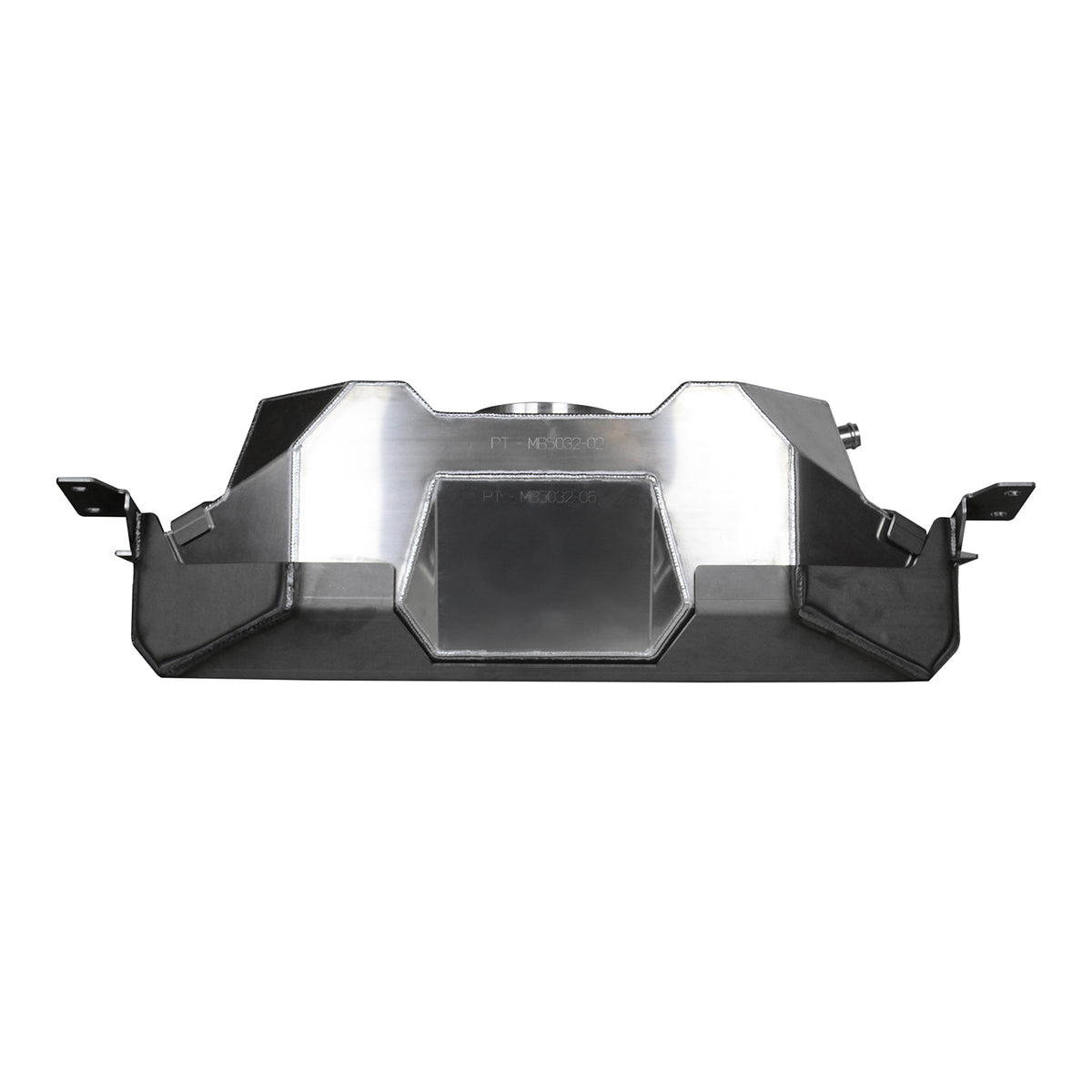
Instead of giving up the space behind the seats to an interior fuel cell, MB5074 moves 20 gallons of capacity underneath the Jeep. The aluminum tank sits between the rear frame rails and behind the axle, while a formed steel skid protects it in the new chassis layout.
The short answer
Choose MB5074 when your stretched YJ, TJ-to-LJ conversion or LJ uses one of the compatible Motobilt back half systems and you want the fuel cell outside the passenger area.
Do not choose MB5074 for a standard-wheelbase YJ or TJ back half. This is an application-specific tank, not a universal fuel cell.
Why a stretched Jeep needs a dedicated fuel cell
When the rear axle moves back and the factory frame is replaced with a back half, the original fuel-tank location is no longer available. The axle, suspension links, shocks and new frame structure all compete for the same space. A tank that works in a stock chassis may interfere with suspension travel or simply have nowhere to mount.
The traditional workaround has been a fuel cell behind the seats. It solves the packaging problem, but it also consumes valuable cargo room and places the tank inside the passenger compartment. MB5074 turns the area created by the long-wheelbase chassis into a purpose-built underbody fuel location.

From El Jefe proof of concept to a production system
Motobilt's El Jefe Jeep YJ has run a similar underbody fuel-cell layout behind the rear axle for more than two years. That 15-gallon configuration proved the basic idea in a real trail build: move the tank outside the cargo area, use the new back half layout efficiently and protect the system underneath the Jeep.
MB5074 takes that concept further. Capacity increases to 20 gallons, and the tank, skid, brackets, pump interface, filler and vent components are packaged as one production solution for the listed back half systems.


MB5074 fitment: YJ stretch, TJ-to-LJ and LJ back halves
Fitment is determined by the rear chassis—not simply by the Jeep badge on the body. MB5074 was designed around the space created by the following Motobilt back half systems.
| Starting platform | Compatible chassis configuration | What MB5074 provides |
|---|---|---|
| Jeep YJ | MB3067 15-inch Stretch Back Half | A rear-mounted fuel system for the YJ-to-LJ-length chassis layout |
| Jeep TJ converted to LJ length | MB3020-S or MB3020-W LJ Back Half | 20 gallons of underbody capacity for the converted rear chassis |
| Jeep LJ | MB3020-S or MB3020-W Back Half | A protected tank between the new frame rails and behind the axle |
| LWB conversion | Upcoming MB3082 LWB Conversion Back Half | Fuel storage designed into the long-wheelbase chassis package |
Important: MB5074 does not fit the standard Motobilt YJ or TJ back half kits. Confirm the exact back half and axle location before ordering or drilling mounting holes.
What the 20-gallon fuel-cell system includes
Fuel capacity
20-gallon 5052 aluminum cell
More range than the 15-gallon proof-of-concept tank used in El Jefe, with welded construction and application-specific packaging.
Underbody protection
A36 steel skid plate
The tank is paired with a formed steel skid designed for its behind-the-axle chassis location.
Fuel-system flexibility
MB5515 pump interface
The pump ring is welded to the tank, and a blank plate is included for a custom or aftermarket pump configuration.
- CNC-machined aluminum filler neck
- Threaded filler cap with O-ring seal
- Brass rollover valve and vent hose
- 1/2-inch plugged port that can be used as a return port
- Fuel-cell mounting brackets and rubber isolation strips
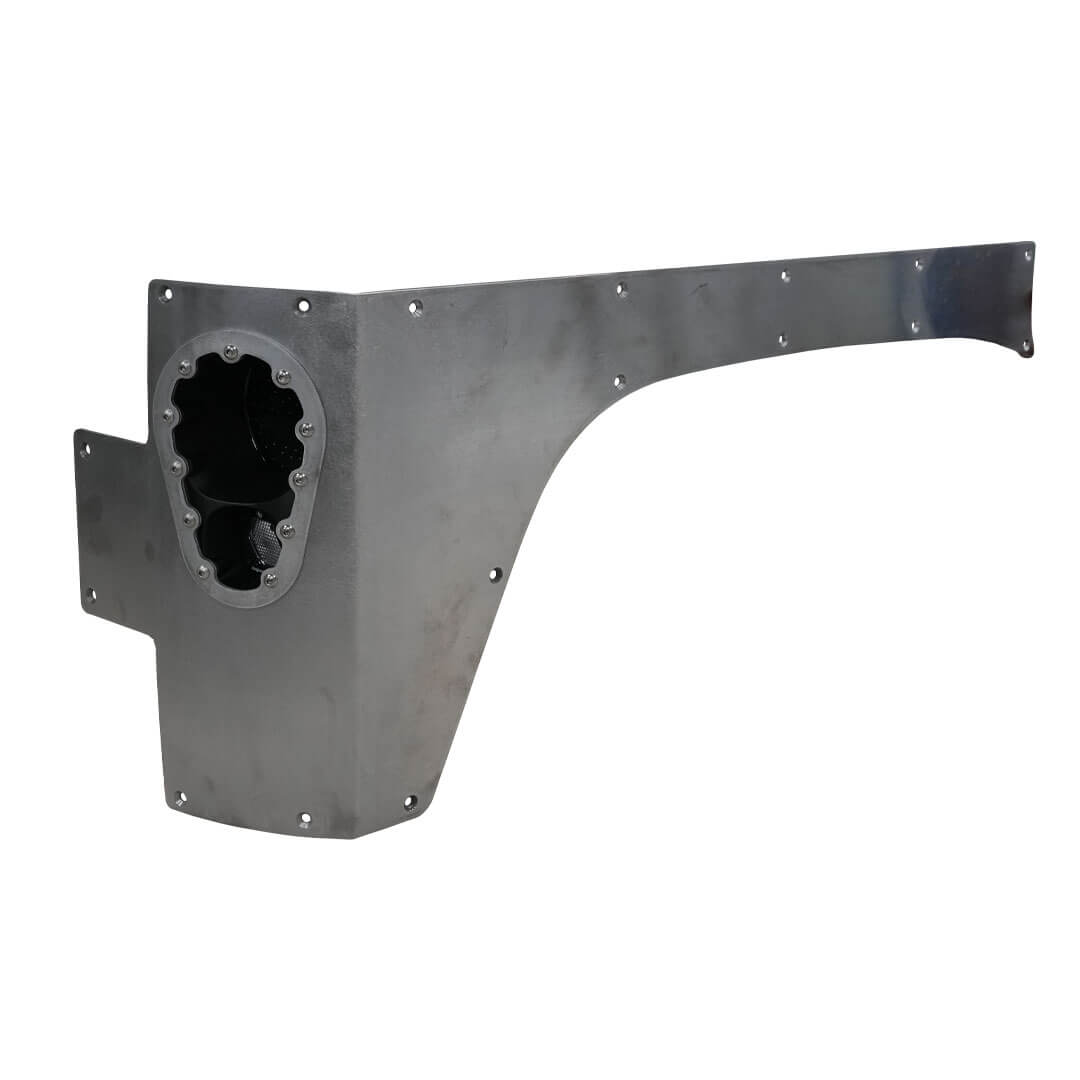
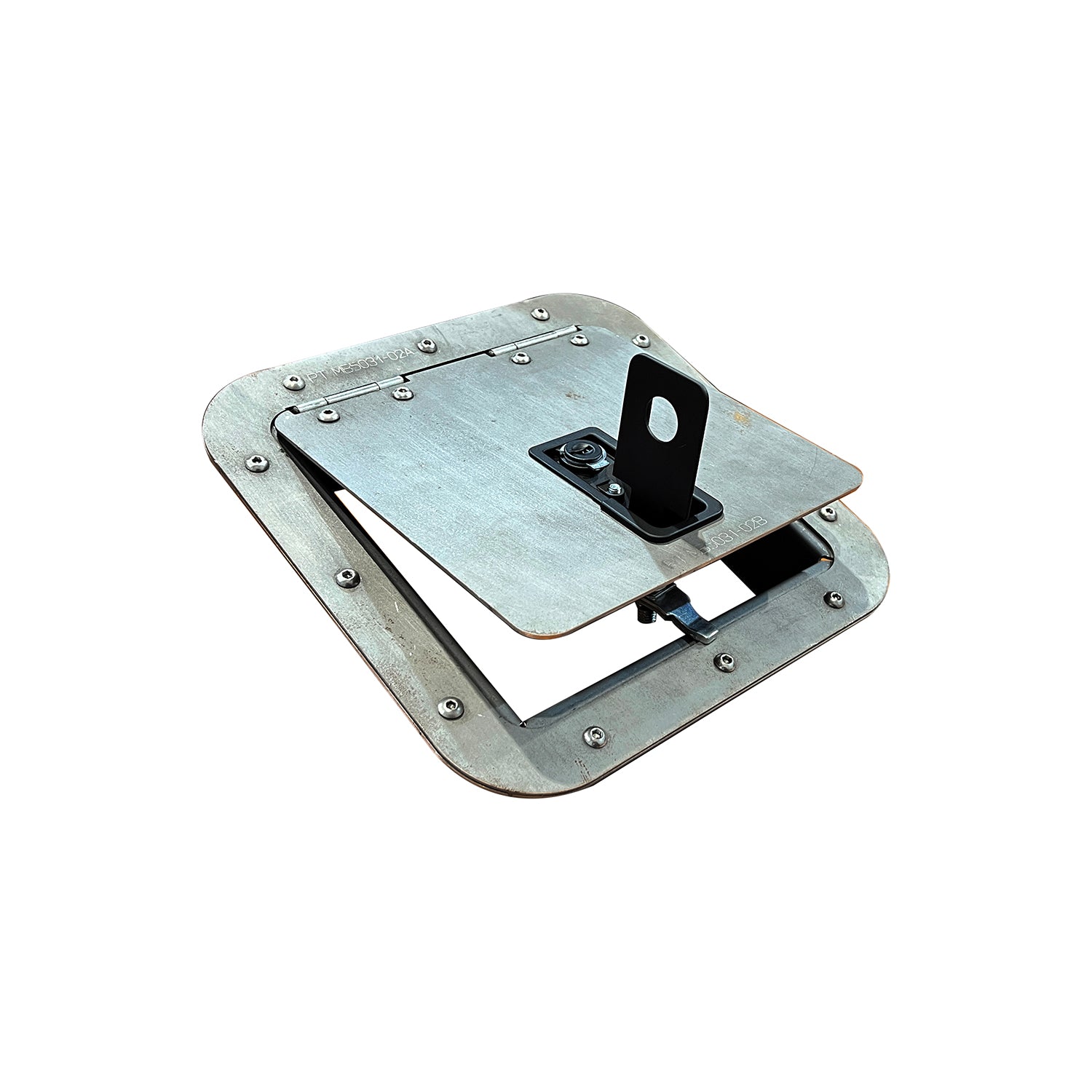
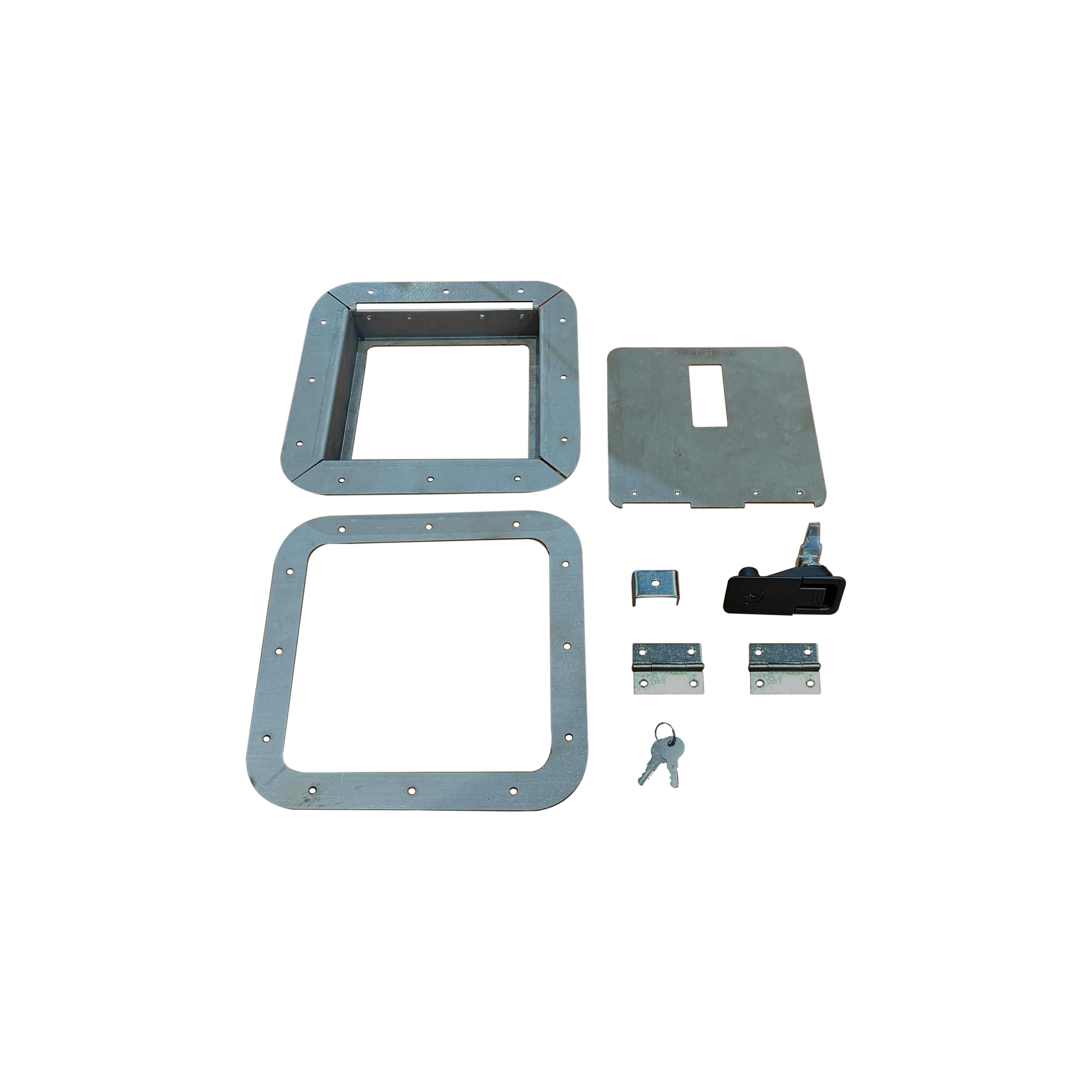
- Included: MB5031 Universal Fuel Access Hatch Kit for lockable service access from above
The fuel pump is not included. Select the pump, fittings, filtration, plumbing and electrical components for the engine and fuel-system requirements of the specific Jeep.
The MB5031 access hatch is included
The MB5074 kit includes the MB5031 Universal Fuel Access Hatch Kit, giving builders lockable service access to the fuel pump from above. The included hatch kit contains the adjustable keyed compression latch, access door, top trim plate and recessed hatch shown below.
MB5074 specifications
| Specification | MB5074 |
|---|---|
| Capacity | 20 gallons |
| Fuel-cell material | 5052 aluminum |
| Skid material | A36 steel |
| Dimensions | 12.5 in. H × 37 in. W × 9.5 in. D |
| Total weight | 116 lb. for fuel cell and skid plate |
| Pump mount | MB5515 ring welded to the fuel cell; pump not included |
| Access hatch | MB5031 Universal Fuel Access Hatch Kit included |
| Venting | Brass rollover valve and vent hose included |
| Manufactured | Made in the USA |
Plan the fuel system with the chassis
MB5074 solves the tank-location problem, but the complete installation is still part of an advanced fabrication build. Plan the fuel system while establishing wheelbase, axle placement, link geometry and rear-chassis structure—not after everything else is final-welded.
- Confirm the back half. Verify MB3067, MB3020-S, MB3020-W or the applicable MB3082 configuration.
- Set final axle placement. Check the differential housing, suspension links and full bump before locating the fuel cell.
- Mock up the tank and skid. Use the supplied brackets and rubber strips, then confirm filler, vent, pump and service access.
- Add the mounting points. Installation with MB3067, MB3020-S or MB3020-W requires drilling the back half and welding mounting nuts into place.
- Complete the vehicle-specific fuel system. Route plumbing, venting and electrical connections for the engine and pump being used.
- Cycle and inspect everything. Verify clearance through full suspension travel before final welding and trail use.
Fabrication is required
This is not a bolt-on replacement for a stock tank. Cutting, drilling, welding, fuel-system plumbing and electrical work must be completed by a qualified builder using the final vehicle configuration.
Questions builders keep asking
Can I use MB5074 when converting a Jeep TJ to LJ length?
Do I need to start with a factory Jeep LJ?
Will MB5074 fit a standard YJ or TJ back half?
Does the MB5074 include a fuel pump?
Can I run a fuel return line?
Is a fuel-pump access hatch included?
Does the system include a skid plate?
Give the stretched chassis a fuel system designed for it
Keep 20 gallons of fuel protected underneath the Jeep while preserving the cargo space behind the seats.
Shop the MB5074 fuel cellPlanning the rest of the build? Explore Motobilt parts for the Jeep YJ, Jeep TJ and Jeep LJ.